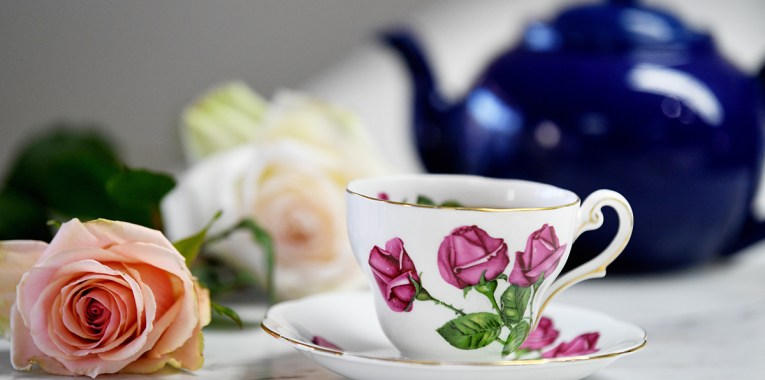
What is it about this quintessentially British habit?
I’ve lived in the United States for more than three decades, but I still find myself wandering absent-mindedly into the kitchen sometime between three and four in the afternoon, thinking that now would be a very good time for a cup of tea.
Friends and colleagues invariably smile and tell me it’s because I’m British.
I’ve always resisted that explanation. After all, I haven’t drunk milk in years, so I’m more likely to be reaching for a cup of ginger or herbal tea than a pot of Assam. And, thanks to my years studying nutrition, I’m not necessarily looking for the obligatory cake or biscuit to accompany it.
And yet, there I am. Tea kettle on.
Perhaps the British tea habit is simply so deeply ingrained that it survives even after decades away from England — rather like an English accent that refuses to disappear completely. I may consider myself a Floridian these days, but apparently some things are encoded rather more deeply than geography.
So I began wondering: why tea? And why that particular time of day?
A Very British Ritual
The history of tea in Britain is fascinating, although the story of afternoon tea is a little more complicated than the familiar version we often hear.
Tea itself arrived in Britain in the 17th century and gradually became a fashionable — and eventually enormously popular — beverage. In 1662, King Charles II married Catherine of Braganza, the Portuguese princess who was already accustomed to drinking tea. Her preference helped make tea fashionable at court, although it would take many years before it became an everyday British ritual.
Thomas Twining opened his first tea shop in London in 1706, and tea merchants and tea houses soon became an important part of London’s social landscape. Coffee houses had long been associated with male intellectual and commercial life, while tea offered women a more socially acceptable way to gather, entertain and converse.
But the afternoon tea we recognise today came considerably later.
The story most often told credits Anna Maria Russell, the seventh Duchess of Bedford, with introducing the tradition in the 1840s. Dinner in fashionable households was often served quite late, leaving a rather substantial gap between lunch and the evening meal. The Duchess reportedly began requesting tea, bread and butter, and something sweet to tide her over.
What began as a private refreshment soon became a social occasion. Friends were invited to join her, and the simple snack evolved into an elegant afternoon ritual involving tea, delicate sandwiches, cakes and, eventually, those essential little scones.
And this is where things get particularly interesting.
Afternoon Tea or Cream Tea?
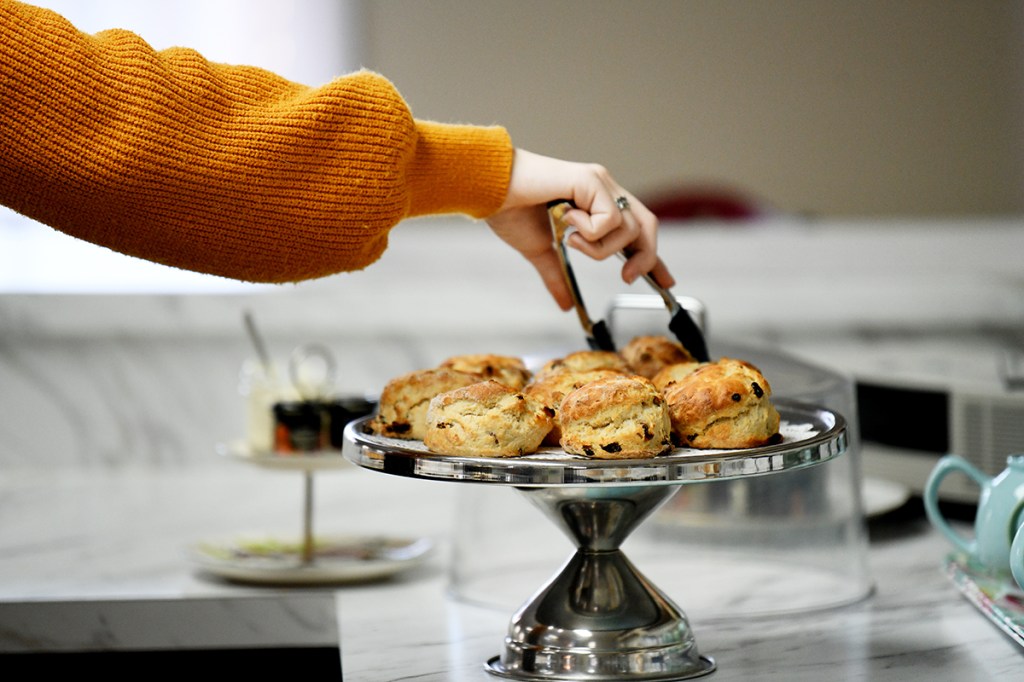
The two terms are often used interchangeably, but traditionally they describe different experiences.
Afternoon tea is the elegant affair: tea served with sandwiches, cakes, pastries and scones, often on a tiered stand and accompanied by a certain amount of ceremony.
Cream tea, on the other hand, is considerably simpler. Traditionally associated with Devon and Cornwall, it consists primarily of tea served with scones, clotted cream and jam.
The precise origins of the cream tea are the subject of considerable debate. Devon lays claim to the tradition, with stories connecting it to the Benedictine monks of Tavistock Abbey, who are said to have served bread, clotted cream and preserves to travellers and workers. Cornwall, naturally, has its own version of the story.
And then there is the question guaranteed to start an argument at any British tea table:
Jam first, or cream first?
In Devon, the cream traditionally goes on the scone first, followed by the jam.
In Cornwall, it is generally jam first, followed by the cream.
I have learned that this is not merely a question of personal preference. It is, apparently, a matter of regional identity.
I shall leave that argument to the experts.
Tea Becomes An Experience
The arrival of the railway in the 19th century helped transform Britain’s relationship with tea. As travel became easier, Devon and Cornwall became increasingly popular destinations, and the cream tea became part of the experience of visiting the Westcountry.
Tea was no longer simply something you drank.
It became an occasion.
And that, I think, is what has always fascinated me about afternoon tea.
Having once owned a tea room myself, I know that a proper tea involves far more than putting a kettle on. There is the tea itself, of course, but there is also the china, the table, the service, the food, the setting and — perhaps most importantly — the decision to stop whatever else you are doing and simply sit down.
That is what makes afternoon tea such a lovely travel experience.
A great afternoon tea tells you something about where you are. It can reflect a hotel’s history, a city’s character, a country’s traditions or simply the personality of the people who created it. Some are wonderfully formal. Others are relaxed and playful. Some are memorable because of exquisite pastries; others because of the tea itself, the china, the service or the view.
And occasionally, a tea gets everything right.
Those are the ones I want to find.
Why Travel To A Tea?
After years of travelling, and after enjoying afternoon teas everywhere from grand British hotels to destinations much farther afield, I realised that I was paying attention to tea in much the same way I pay attention to hotels and restaurants.
What was served? How was it presented? Was the tea actually good? Were the sandwiches dainty or decidedly not? Was the scone worthy of its clotted cream? Was the service polished without being stiff? Did the setting make me want to linger?
In other words, was it a good afternoon tea?
That is what Travel To A Tea is about.
I’m not here to tell you that there is one perfect way to take tea. I’m here to explore the experience — the traditions, the food, the tea, the surroundings and all those little details that can turn an ordinary afternoon into something memorable.
Because after all these years, I still find myself wandering toward the kettle sometime around three o’clock.
Perhaps my friends were right after all.
Perhaps it really is because I’m British.
And perhaps that isn’t such a bad thing.

