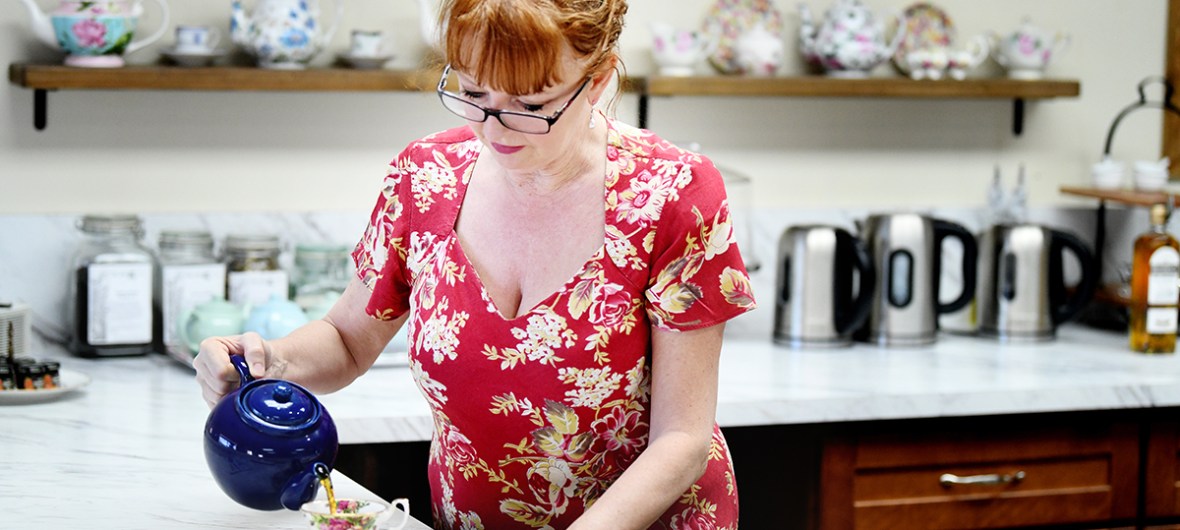
When my chef husband, Michael, and I were operating the café at our local botanical garden, pre-COVID, I decided to indulge my British penchant for afternoon tea. The setting was perfect: tables nestled among beautiful gardens, with a light and airy interior for those particularly Floridian days when sitting outside wasn’t quite so appealing.
It seemed idyllic. And indeed it was — apart from the time a snake fell out of a tree with a rat in its mouth and landed with a spectacular crash on one of the tables.
Or the guests who complained about insects while dining outdoors.
Sorry, I digress.
Afternoon tea at the Garden was a huge success, so when Michael and I went on to open our own place, my grand plans for a Mediterranean wine bar lasted approximately a week. And so began our adventure as the owners of a British café and tea room.
I grew up in England enjoying tea in its many forms, from a simple cream tea to a lavish Royal Tea at London’s Savoy, and even a very traditional high tea — which, contrary to popular belief, is not the same thing as afternoon tea.
I’ve always loved ritual, and I’m slightly horrified by how quickly we seem to eat nowadays. When I moved to the US in 1991, I was appalled to discover that lunch breaks were often just 30 minutes long. I’d hear microwaves beeping incessantly during peak lunch hours, accompanied by the endless parade of delivery drivers bringing subs and pizza for people to eat at their desks.
Afternoon tea is, to me, a respite from this crazy world we’ve created.
It is the ultimate sharing meal. The pace encourages you to slow down, talk, catch up with your companions and, most importantly, actually enjoy what you’re eating. That was precisely the point when the Duchess of Bedford is credited with starting the tradition in the Victorian era: a little something to bridge the gap between lunch and the rather late dinners that were fashionable at the time.
And then there is the etiquette.
Afternoon tea encourages respect, good manners and that wonderfully British art of polite negotiation.
“Do have the last sandwich.”
“Oh, I couldn’t possibly.”
“Really, I insist.”
“Well, I suppose someone has to have it.”
Our little café eventually closed when Michael faced some health challenges. Unable to manage the operation on my own, I returned to the field where I had started many years earlier: travel.
Today, I work as a luxury travel consultant, specialising in wellness and culinary travel — think balance — and I also write about travel for a lifestyle magazine.
Some of my journeys are wonderfully leisurely. Others, particularly familiarisation trips in a new destination, can feel rather like speed dating: hotels, restaurants, tours, inspections and experiences, all packed into a remarkably short amount of time.
But wherever I am in the world, I try to find time for tea.
Travel To A Tea is where I share those experiences — the beautiful settings, the delicious food, the history and traditions, the little details that make a tea memorable, and occasionally the things that make me raise an eyebrow.
Because afternoon tea is about much more than sandwiches, scones and a pot of Earl Grey. It is about taking time. It is about conversation, ceremony and connection. And, of course, it is about discovering how different cultures around the world interpret one of Britain’s most enduring rituals.
I’m delighted to share these special moments with you.
And I would love to hear about yours. If you have a favourite afternoon tea somewhere in the world, please share it in the comments. I’m always looking for the next great tea table.

