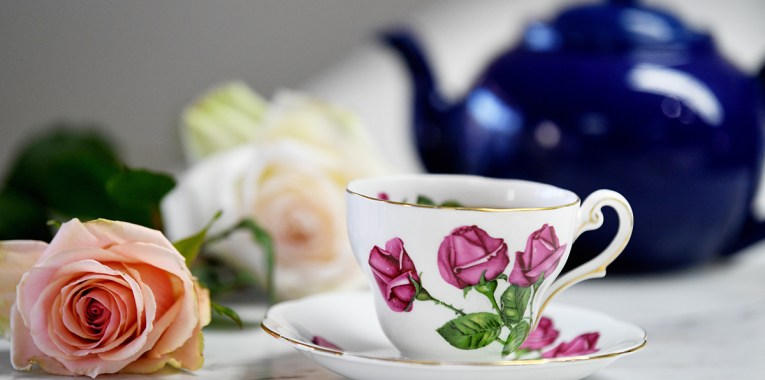
I am often asked how I can possibly drink hot tea in Florida in the summer.
It is a reasonable question. Florida is not exactly short on sunshine, and during the summer months the combination of heat and humidity can make the simple act of walking from the front door to the car feel like an expedition. Yet after more than 35 years in Florida, I still begin most mornings with a cuppa.
And I mean a hot cuppa.
In fact, I have never acquired the American habit of reaching for iced tea when the temperature rises. I grew up in Britain drinking tea all year round, and as a Brit, I don’t even call it “hot tea.” It is simply tea. Tea that has been allowed to cool down is another matter entirely.
My husband, a native Floridian, takes a different view. He believes he has consumed hot tea when he has been ill. I suspect, knowing him, that he was actually drinking a hot toddy. His beverage of choice in normal circumstances is iced tea, preferably sweet. And he is hardly alone: roughly 80 percent of the tea consumed in the United States is iced.
For me, iced tea is something else altogether.
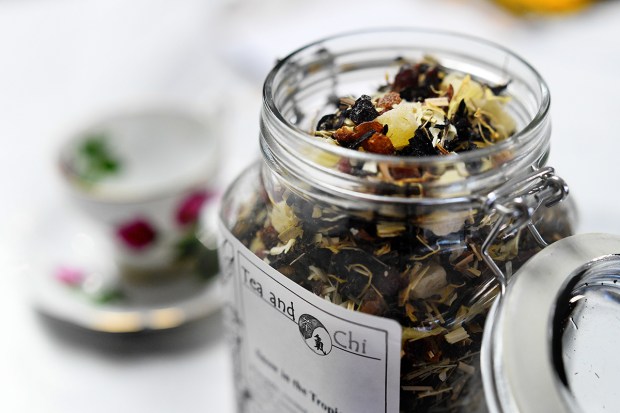
Hot Tea in Hot Places
The curious thing is that drinking hot tea in warm weather is hardly a peculiarly British eccentricity.
Some of the world’s great tea-drinking cultures are found in places where temperatures routinely climb far higher than those in Britain.
I discovered this for myself while teaching English in Sudan. Hot, sweet tea was served throughout the day at the schools where I was stationed. In Port Sudan, temperatures could soar above 100°F, with humidity sometimes reaching 70 percent. And yet a steaming glass of tea was entirely unremarkable.

More than that, it was hospitable.
Tea was often the first thing offered when you entered someone’s home. It wasn’t regarded as a strange choice of beverage simply because the weather was hot. It was tea. You drank it because that was what people drank.
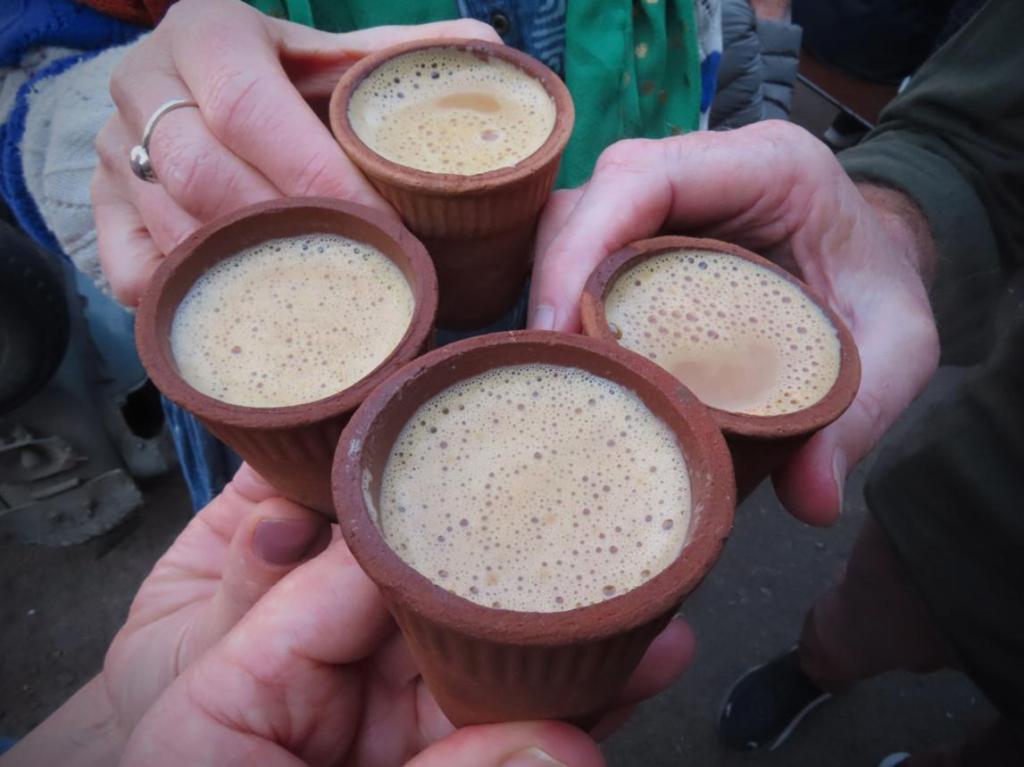
I encountered much the same attitude during several stays in Cairo. My Egyptian host “mummy” and I could spend hours over steaming glasses of tea, usually heavily sweetened and accompanied by fresh mint. Iced tea wasn’t merely unpopular. It was barely part of the conversation.
And this is where the subject becomes more interesting. In many warm-climate cultures, tea isn’t simply a way of cooling yourself down. It is woven into hospitality, social interaction and daily life.
Think of Moroccan mint tea, traditionally served hot and generously sweetened. Consider tea culture across the Middle East, South Asia and parts of Africa, where hot tea is routinely served despite formidable temperatures.
The beverage is doing more than quenching thirst. It is providing a ritual, a pause and a reason to sit down with someone.
But could there also be a physiological reason for the tradition?
As it turns out, perhaps.
The Science Behind a Hot Drink
This is where my fellow Cambridge graduate, neuroscientist Dr Peter McNaughton, enters the story.
In an interview with NPR, Dr McNaughton explained that drinking a hot beverage can stimulate receptors in the mouth and upper digestive tract that increase sweating. That sounds distinctly counterproductive when you are already hot, but there is a method to the madness.
Sweating is one of the body’s principal ways of getting rid of heat.
When sweat evaporates from the surface of the skin, it carries heat away from the body. So, under the right conditions, drinking something hot can cause you to sweat more, and that increased sweating can ultimately have a cooling effect.
There is, however, an important qualification.
The sweat has to evaporate.
If you are in a very humid environment, where the air is already saturated with moisture, evaporation becomes much less efficient. You may simply find yourself hot, damp and wondering why on earth you listened to someone who told you to drink a steaming cup of tea in Florida in August.
This is why the idea that “hot drinks cool you down” shouldn’t be treated as a universal law.
It is better understood as a question of thermoregulation and environmental conditions.
Your body is constantly attempting to keep its core temperature within a remarkably narrow range. When you become too warm, sweating is one of the mechanisms it uses to shed excess heat. A hot drink can encourage that response. Whether the additional sweating actually cools you depends largely on how effectively the sweat can evaporate.
There is another practical consideration, too: hydration.
If you are sweating heavily, replacing lost fluid matters. Tea contributes to your overall fluid intake, although it shouldn’t be regarded as a special substitute for water when you are becoming dehydrated or exercising in extreme heat.
So perhaps the more accurate answer to the question “Does hot tea cool you down?” is:
Sometimes. Under the right conditions, it can help your body cool itself.
That is rather more nuanced than “drink tea and you won’t feel hot.”
The Humidity Problem
This is particularly relevant to my life in Florida.
I can tell you from personal experience that drinking a hot cup of tea on a dry, breezy day is one thing. Drinking it when the Florida air feels as though you have walked into a wet towel is quite another.
In a hot, dry climate, sweat can evaporate readily. In a hot, humid climate, evaporation is restricted. This is one reason why humid heat can feel so oppressive: your body’s cooling system is working, but one of its most important mechanisms isn’t operating as efficiently.
So no, I wouldn’t recommend that someone who is already dangerously overheated sit down with a mug of boiling tea and assume they have discovered a secret cooling technique.
There are sensible reasons to reach for water, shade, air conditioning or other appropriate ways of cooling yourself.
But for an otherwise comfortable person sitting in a warm environment?
A cup of tea is hardly the lunacy it might appear.
Tea Is Also About Tradition
There is another explanation for hot tea in hot countries that science cannot provide.
People drink what they are accustomed to drinking.
Tea has travelled across continents for centuries, and wherever it has taken root, people have adapted it to local tastes, ingredients and customs. Sometimes that means milk and sugar. Sometimes mint. Sometimes spices. Sometimes an extraordinary amount of sugar.
And often, the temperature of the drink remains hot simply because that is how tea is traditionally prepared and served.
So, Will I Be Putting the Kettle On in August?
Absolutely.
After living in warm climates for more than half my life, I have long since stopped defending my morning tea. I have drunk it in Sudan, Egypt and Florida, and I have never found the heat sufficiently persuasive to abandon it.
Besides, there is something wonderfully reassuring about a familiar ritual.
And if the science tells me that my cup of tea may encourage me to sweat a little more, I’ll take that as a bonus.
Just don’t expect me to put ice in it. That, I’m afraid, is where I draw the line.
I’ll put the kettle on.
A note on the science: The cooling effect of a hot drink depends on the body’s ability to evaporate the additional sweat it produces. In hot, humid conditions, evaporation is impaired, so a hot beverage should not be regarded as a reliable method of cooling an overheated person. When someone is experiencing heat illness, appropriate cooling and hydration take precedence.

